
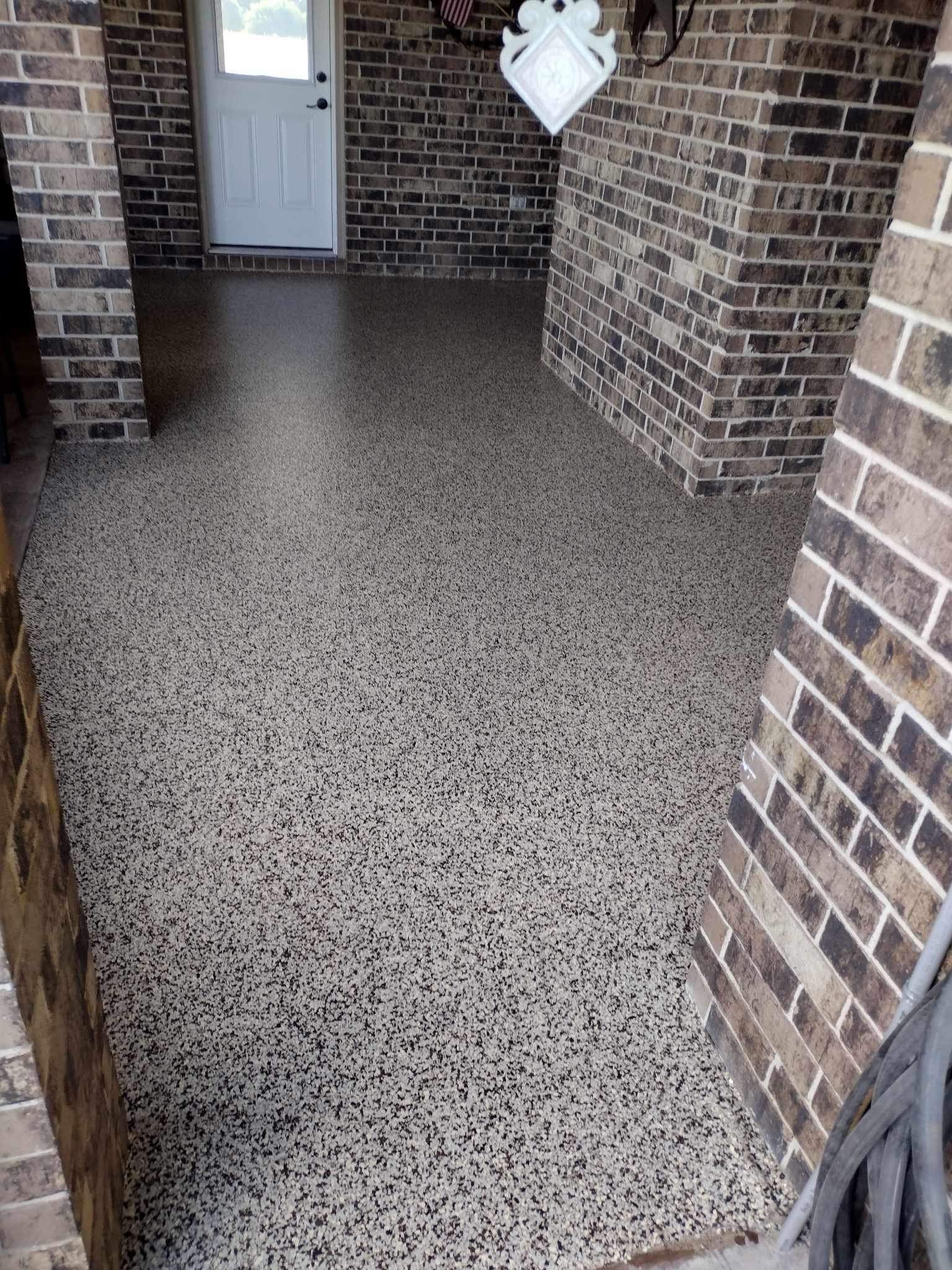
Floors Built for Heavy Traffic and Daily Use
Polyaspartic Flake System in Texarkana for garages and patios that see constant activity
Diamond Cut Custom Coating installs polyaspartic flake systems across Texarkana using premium base and top coats engineered to handle the specific demands of Arkansas conditions. The system addresses what happens when traditional concrete breaks down under moisture exposure, temperature swings, and heavy vehicle traffic. You're working with a coating designed to stay bonded through humidity, heat, and the freeze-thaw cycles that cause other surface treatments to fail.
The installation process begins with aggressive surface preparation to open the concrete pores, followed by application of a high-solids polyaspartic base coat while the surface is still receptive. Colored flakes are broadcast into the wet base to create texture and slip resistance, then locked in place with a clear polyaspartic top coat that cures rapidly. This build addresses the core problem with garage and patio floors: concrete that absorbs oil, retains stains, and deteriorates when exposed to repeated moisture and chemical contact.
Request a quote to review flake color options and discuss your project timeline.
What Happens During and After Installation
The work typically completes in one day, starting with diamond grinding or shot blasting to remove any existing coatings and create the surface profile needed for proper adhesion. The polyaspartic base coat goes down in controlled passes, flakes are distributed by hand to ensure even coverage without bare spots, and excess material is removed before the top coat is applied. Each layer is engineered to cure quickly even in high humidity, which matters in Arkansas where moisture can interfere with traditional epoxy cure times.
Once the system cures, your floor resists hot tire pickup, meaning tires won't pull the coating off when you park a vehicle that's been on hot asphalt. You'll notice oil and fluids bead on the surface instead of soaking in, stains wipe away without scrubbing, and the slip-resistant texture provides traction even when wet. The floor maintains its appearance without yellowing or hazing under UV exposure, which is why the same system works for covered patios and outdoor entertainment areas.
The system doesn't require annual resealing or waxing to maintain performance. Light foot traffic is safe within hours, and full vehicle weight is supported the next day, though cure times extend slightly in cooler weather. The coating remains flexible enough to move with minor concrete movement without cracking, which prevents the edge lifting and delamination that happens with rigid coatings on slabs that shift seasonally.
Customers in Texarkana often have questions about how the system performs in real-world garage and patio conditions, especially when comparing it to other coating options they've researched.
What Property Owners Usually Ask
What makes polyaspartic different from standard epoxy?
Polyaspartic coatings cure through a different chemical reaction that isn't slowed by humidity or temperature, allowing for faster project completion and better performance in moisture-prone environments like Arkansas garages where condensation forms regularly.
How do you choose flake colors and coverage density?
You select from a range of color blends during the quoting process, and coverage density affects both appearance and texture—heavier flake broadcast creates more slip resistance and hides the base coat completely, while lighter coverage lets more of the base color show through for a different visual effect.
What surface preparation is required before coating?
The concrete must be mechanically profiled using grinders or blasters to remove any previous sealers, oils, or weak surface material, creating the rough texture needed for the polyaspartic base to bond at a molecular level rather than just sitting on top of smooth concrete.
Can the system handle Arkansas heat and humidity?
The formulation is designed for high-temperature environments and won't soften under hot tire contact or degrade when exposed to the humidity levels common in covered outdoor spaces during summer months.
What happens if the concrete already has cracks?
Minor cracks are filled and reinforced during surface prep, though active foundation movement or large structural cracks require repair before coating to prevent the crack from telegraphing through the finished system and compromising the seal.
Diamond Cut Custom Coating prices the polyaspartic flake system competitively compared to higher-cost regional competitors while using the same grade of industrial materials. Schedule a consultation to see flake samples in person and discuss how quickly your space can be back in service.