
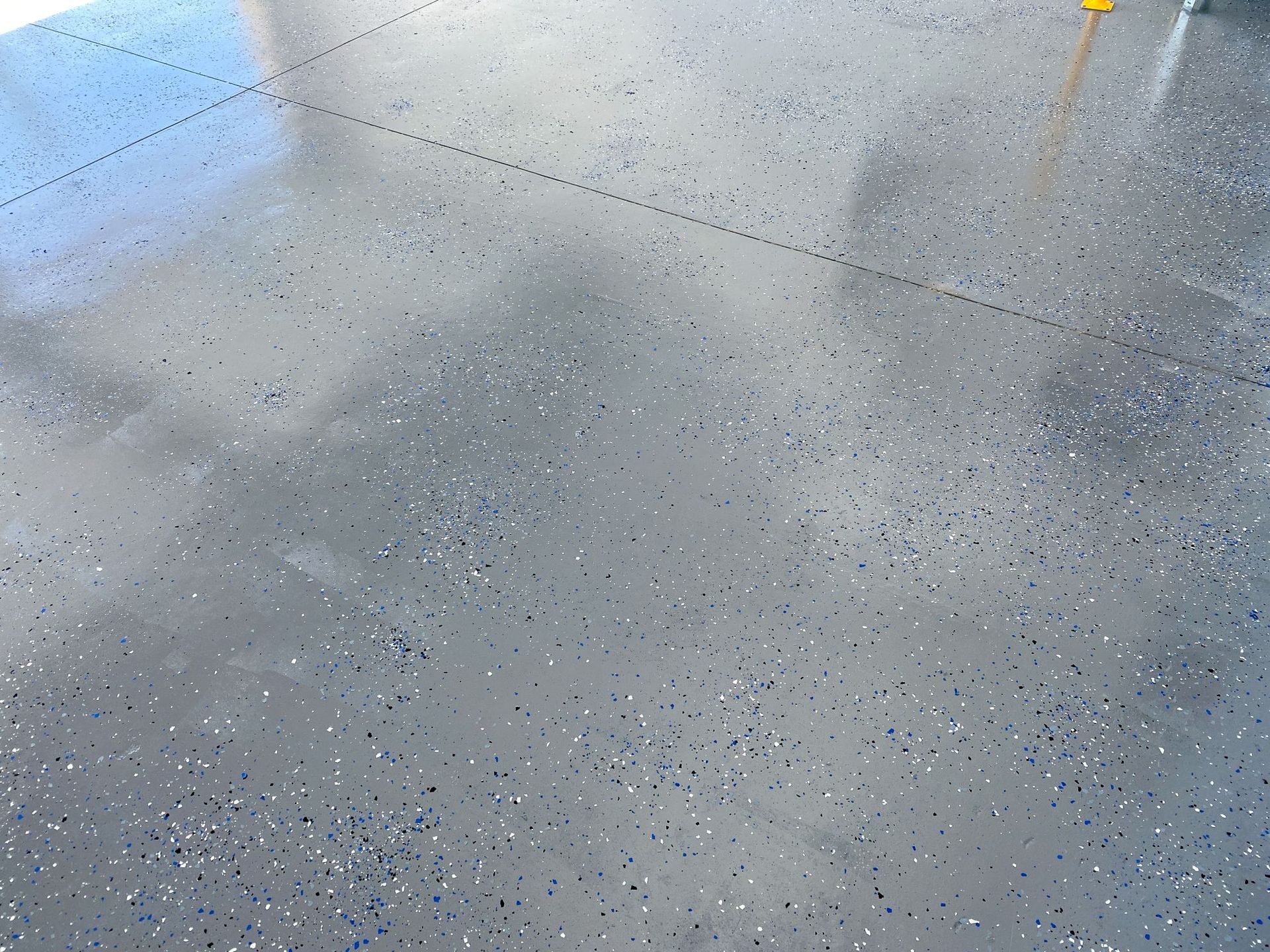
Surfaces That Handle Oil and Vehicle Traffic
Garage Floor Coating in Texarkana for residential garages where durability and cleanup matter
Hot tire pickup, oil stains that soak into bare concrete, and dust that settles on everything stored in the garage are problems that stem from untreated concrete's porous structure and weak surface layer. Diamond Cut Custom Coating installs polyaspartic and epoxy garage floor systems that seal the concrete and create a chemical-resistant barrier designed to handle vehicle weight, fluid spills, and the daily use that degrades unprotected slabs. The work happens across Texarkana in residential garages where homeowners are tired of scrubbing stains that won't come out and dealing with concrete that sheds dust no matter how often it's swept.
The coating system starts with mechanical surface preparation using grinders to remove any existing sealers, open the concrete pores, and create the texture profile needed for proper adhesion. A base coat is applied while the prepared surface is still receptive, followed by optional decorative flakes for slip resistance and visual texture, then sealed with a clear top coat engineered to resist tire marks and chemical etching. Polyaspartic systems cure faster than epoxy and tolerate higher humidity during installation, which matters in Arkansas where garage conditions aren't always climate-controlled.
Get a free garage floor estimate to compare polyaspartic and epoxy options based on your timeline and budget.
What a Coated Garage Floor Actually Accomplishes
Once installed, the coating prevents fluids from penetrating the concrete, so spilled oil, transmission fluid, and coolant bead on the surface instead of soaking in and leaving permanent stains. Cleanup becomes a matter of wiping up the spill with a towel or absorbent mat rather than scrubbing with degreasers and still seeing discoloration. The sealed surface also stops concrete dusting, eliminating the fine powder that coats tools, storage bins, and anything else sitting on an untreated slab.
Your garage floor reflects light more effectively because the smooth, glossy coating bounces overhead lighting instead of absorbing it the way textured concrete does. This makes the space brighter without adding fixtures, and it becomes easier to spot dropped screws, washers, and small parts against the uniform background. Slip-resistant flakes embedded in the coating provide traction even when the floor is wet from snow melt or washing vehicles, addressing the safety issue that comes with smooth, wet concrete.
The coating doesn't require annual reapplication or maintenance beyond routine cleaning with mild detergent and water. It resists hot tire pickup, meaning tires won't pull the coating off when you park a vehicle that's been driven on hot pavement. Full cure takes longer with epoxy systems than with polyaspartic, so traffic restrictions and project timelines differ depending on which chemistry is used for your installation.
Homeowners across Texarkana typically want to know how garage floor coatings hold up under real-world use and what the installation process requires in terms of time and preparation.
Common Questions About This Service
What's the difference between polyaspartic and epoxy for garage floors?
Polyaspartic coatings cure faster and tolerate higher humidity during application, allowing for quicker project turnaround, while epoxy systems cost less and perform well in climate-controlled garages where longer cure times aren't an issue.
How long does the garage need to be empty during installation?
The floor must be completely clear for surface preparation and coating application, and vehicles stay off the floor for at least 24 hours with polyaspartic systems or up to 72 hours with epoxy to avoid damaging the coating before it fully cures.
Can coating be applied over cracked or damaged concrete?
Minor cracks are filled and reinforced during prep, but active settlement cracks or structural damage in the slab will telegraph through the coating over time and should be repaired before installation to prevent premature coating failure.
What happens if the concrete is already sealed or painted?
Existing sealers and paint must be removed through grinding or chemical stripping because the new coating needs to bond directly to raw concrete, and any barrier between the two prevents adhesion and leads to delamination under use.
How do you maintain a coated garage floor long-term?
Regular sweeping and occasional mopping with pH-neutral cleaners keeps the surface clean, and the coating resists staining and wear without needing wax or resealing, though avoiding dragging sharp metal objects across the floor prevents scratches that expose the concrete underneath.
Diamond Cut Custom Coating completes garage floor installations with minimal disruption to daily routines, using systems engineered to perform in residential conditions common across Texarkana. Call (870) 230-9622 to discuss coating options and confirm how quickly your garage can be back in service after installation.