
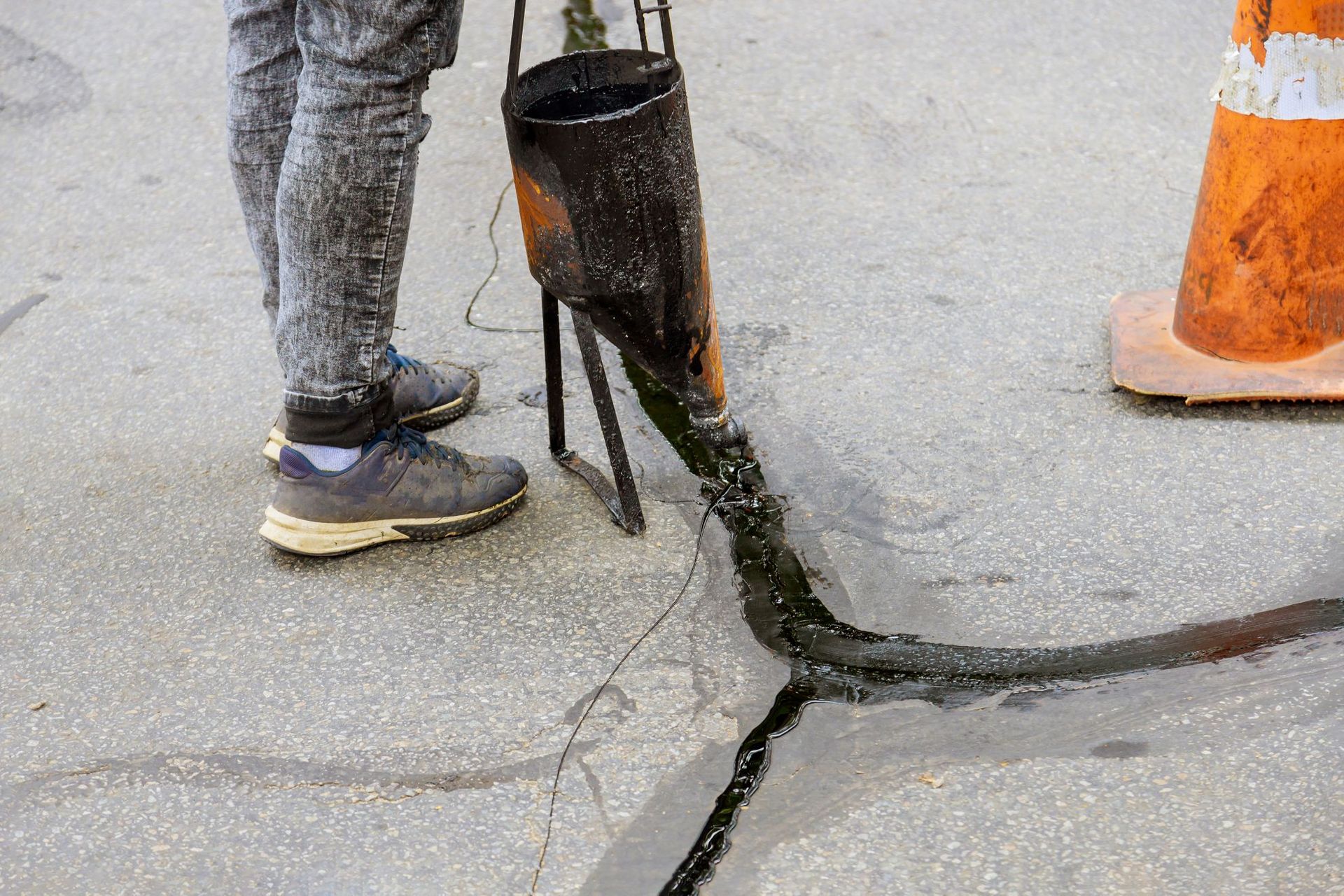
Repairs That Restore Surface Integrity
Concrete Fillers and Repair in Texarkana for cracks and surface damage that compromise coating adhesion
Cracks and spalled areas in concrete allow moisture penetration that accelerates deterioration and prevent coating systems from bonding uniformly across the surface. Diamond Cut Custom Coating uses industrial and polyaspartic fillers to restore structural integrity and create the sound substrate required for long-lasting coating performance. This repair work addresses damage from settling, freeze-thaw cycles, and surface wear on driveways, patios, garage floors, and commercial concrete throughout Texarkana before coating application or as a standalone service to extend the life of existing uncoated surfaces.
The repair process involves routing cracks to create clean edges, removing loose material from damaged areas, and filling voids with materials engineered to bond with existing concrete while accommodating the slight movement that occurs with temperature changes. Industrial fillers provide high strength for load-bearing repairs, while polyaspartic fillers offer fast cure times and flexibility suited to crack repair where some substrate movement continues.
Schedule an inspection to identify damage patterns and receive a repair plan with material recommendations.
How Proper Crack Repair Improves Coating Longevity
Crack routing creates a uniform channel with defined geometry that gives filler material adequate thickness and surface area for mechanical bonding, preventing the shallow fills that break loose under traffic or thermal stress. The routing depth typically reaches three-quarters of an inch to accommodate filler volume that won't simply bridge across the crack opening. Polyaspartic fillers cure rapidly, allowing same-day coating application in many cases, while traditional epoxy and urethane fillers require extended cure periods before coating proceeds.
Once repairs cure, the surface regains uniform strength and provides the continuous substrate that coating systems require for proper adhesion across the entire floor area. You notice that filled cracks no longer collect dirt and debris, and the surface presents a uniform profile ready for coating application without the depressions and voids that show through thin coating layers. The repair work prevents the reflective cracking that occurs when coatings are applied over unrepaired damage, where substrate movement telegraphs through the coating and recreates the original crack pattern in the finished surface.
Repair services suit both preparation for coating installations and standalone restoration of concrete that will remain uncoated but benefits from restored structural integrity and improved appearance. The approach varies based on damage extent, with minor cracks receiving different treatment than extensive spalling or surface deterioration requiring more aggressive intervention.
Concrete repair often raises questions about material selection, timing relative to coating work, and whether existing damage can be successfully addressed.
What Property Owners Usually Ask
What determines whether industrial or polyaspartic fillers are used?
Industrial fillers suit structural repairs and high-load areas requiring maximum compressive strength, while polyaspartic fillers work best for crack repair and surface restoration where fast cure and flexibility matter more than absolute strength.
Can all concrete damage be repaired successfully?
Extensive deterioration, active settling, or structural failure may require slab replacement rather than repair, with the assessment based on damage depth, crack width, and whether underlying causes like poor drainage or base failure have been addressed.
How soon can coating proceed after crack repair?
Polyaspartic fillers cure within hours and allow same-day coating application, while traditional epoxy and polyurea fillers require 24 to 48 hours of cure time before coating materials can be applied without risking delamination.
Will repaired cracks be visible after coating?
Proper filling and surface preparation minimize visibility, though crack locations may show slight texture variation under certain lighting conditions depending on crack width and filler material used during the repair process.
Does repair work require follow-up maintenance?
Repairs performed with appropriate materials and proper technique provide long-term performance without routine maintenance, though monitoring for new cracking related to ongoing settlement or substrate movement remains advisable across Texarkana properties built on expansive soils.
Diamond Cut Custom Coating evaluates concrete condition during the estimate process and recommends repair approaches that match the scope of damage and intended use of the surface. Call to arrange a detailed inspection and receive a repair quote that can be coordinated with coating installation or completed as a standalone service.